
Fifteen years into his marriage, Noor Mohammad Ganju has never seen his wife naked. He lusts after her but sex, when she occasionally obliges him, is reduced by veils—literal and symbolic—to tedious and unimaginative coupling in the dark.
South Asia
After student protests toppled Bangladesh prime minister Sheikh Hasina last year, New Delhi and Dhaka have been at odds. Indian politicians complain about Hindus being mistreated in the Muslim-majority country; Bangladesh’s interim government fears that Hasina may launch a bid to return to power from India.
China has been one of the leading sources of overseas visitors to the Maldives in recent years. Bin Yang, a professor of history at City University of Hong Kong, makes the argument in Discovered but Forgotten that this is to some extent a rerun of the situation in the 14th and 15th centuries when the Maldives were firmly on Chinese maps of places to visit.

Can we write women’s authorial roles into the history of industrial cinema in South Asia? How can we understand women’s creative authority and access to the film business infrastructure in this postcolonial region? Esha Niyogi De draws on rare archival and oral sources to explore these questions from a uniquely comparative perspective, delving into examples of women holding influential positions as stars, directors, and producers across the film industries in India, Pakistan, and Bangladesh.
The word miniature in fact comes from the Larin miniare or “to paint red”; early European miniatures—palm sized pieces that are parts of manuscripts and books facing a verse or an intense moment in a story or placed behind one—were initially delineated in that pigment. There was an Asian tradition of such painting as well, with Indian examples including illustrations in such texts such as the 12th-century Gita Govinda and 15th-century Rasa Manjari (15th century), as well as a great many Mughal examples.
It is a tribute to the literary diversity of India that this anthology of ten excerpted classics includes eight or nine different languages. They also represent four different religious traditions. Yet the texts are unmistakably Indian, sharing a love for words, sounds and images and exhibiting an exuberance rarely found in other cultural traditions.
Originally written in Bengali, Shabnam presents a passionate love story set in 1920s Afghanistan. What is love? asks author Syed Mujtaba Ali: a dream or a dreamy reality? Maybe, it is like an overnight train journey through a long tunnel, in which the traveler stays awake to catch a glimpse of the sun’s first rays, but falls asleep just before dawn. When he wakes up frustrated, he comforts himself by thinking that the soft light had touched his skin and its warmth had seeped into his veins through the pores. The elusiveness of love is a potent theme in this classic novel now available in an English translation from Nazes Afroz.
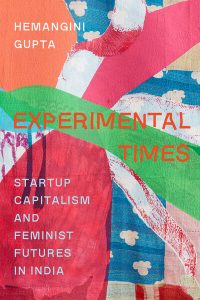
Experimental Times is an in-depth ethnography of the transformation of Bengaluru/Bangalore from a site of “backend” IT work to an aspirational global city of enterprise and innovation. The book journeys alongside the migrant workers, technologists, and entrepreneurs who shape and survive the dreams of a “Startup India” knitted through office work, at networking meetings and urban festivals, and across sites of leisure in the city.
Between 5 November and 31 December 1945, three officers of the Indian National Army (INA) were tried by a British military court on charges of murder and waging war against the British king. Shah Nawaz Khan, Prem Sahgal and Gurbaksh Dhillon were found guilty of committing treason against the Crown, Khan was found guilty of murder, and Sahgal and Dhillon were acquitted of murder charges. But instead of imposing the required sentences of life or death, all three defendants were cashiered from the British Army and had their pay and allowances forfeited. As longtime journalist Ashis Ray explains in The Trial That Shook Britain, British authorities made a decision to effectively grant clemency to the officers due to the political and civil turmoil that surrounded the trial. Although the officers were physically in the dock, it was Indian independence that was on trial.
The Indian epic Mahabharata continues to inspire novelists to retell the story of the war between the Kauravas and the Pandavas, the cousins who fight over the kingdom of Hastinapur, especially from the points of view of the women characters who have been wronged. Many of these retellings—including Ira Mukhoty’s Song of Draupadi reviewed in the Asian Review of Books—narrate the battle and the politics from the points of view of the wronged women: the epic is full of awful stories about women being abducted so that they can be married to the prince of Hastinapur, or tricked into marrying the blind king Dhritarashtra or gambled away by her husband(s).